Introduction
Walk in on a cooler door that's drifted open overnight, and you already know the damage: warm air pooling inside, condensation fogging the shelves, and product temperatures creeping toward the danger zone. It's one of the most common, and most preventable, problems in commercial refrigeration.
The culprits are almost always the same two components: the door closer and the latch.
A U.S. Department of Energy-funded study on walk-in infiltration found that warm, moist air entering through an open or poorly sealed door can account for more than 50% of a walk-in's total cooling load. A standard test cooler loses nearly its entire volume of cold air in about two minutes during a door event.
A door closer controls how a door swings shut. A door latch holds it there. This article breaks down what each one does, the main types you'll encounter, how they work as a team, and what to check before buying hardware for a cooler or freezer door.
Key Takeaways
- A closer controls closing speed and force, while a latch locks the door into a sealed position
- Three latch styles dominate cooler and freezer applications: cam-lift, paddle, and slam/safety-release
- Closer and latch quality directly affects temperature retention, energy bills, and food safety on walk-in doors
- Certifications like NSF, UL, and ANSI/BHMA signal hardware built for commercial-grade durability and code compliance
What Is a Door Closer?
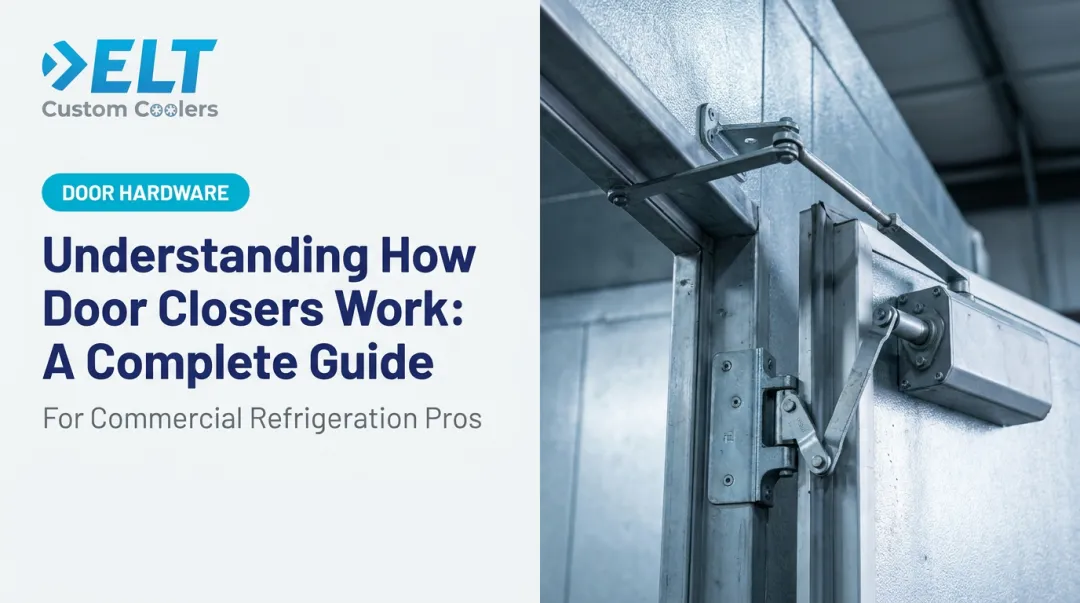
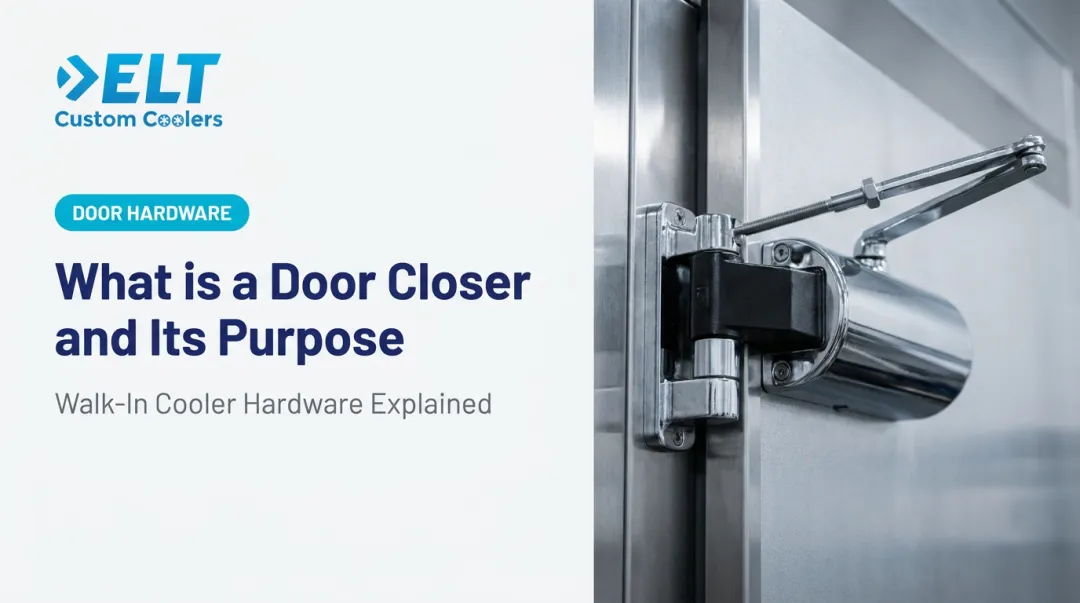
A door closer is a mechanical device, typically spring-loaded or hydraulic, that controls the speed and force of a door as it swings shut. It stops doors from slamming, and just as important on a cooler, it stops them from drifting open and staying that way.
On a walk-in cooler or freezer, the closer's job is narrow but critical: bring the door fully into the frame every single time so the gasket can seal against temperature loss.
Federal law reflects how seriously this is taken. Under 10 CFR 431.306, walk-in units manufactured since January 2009 must include automatic closers that firmly close a door from within 1 inch of full closure. A closer that stops short of that mark leaves the door improperly sealed, driving up your cooling load.
Common Types of Door Closers
Closers on commercial doors generally fall into three categories:
- Surface-mounted closers (standard arm, parallel arm, top jamb): bolted visibly onto the door or frame; the most common setup in commercial buildings
- Concealed or overhead closers: hidden inside the frame or door top rail for a cleaner look, often specified on glass or architectural entries
- Spring-loaded hinges: the closing force lives in the hinge itself rather than a separate closer body, a common approach on lighter-duty cooler doors
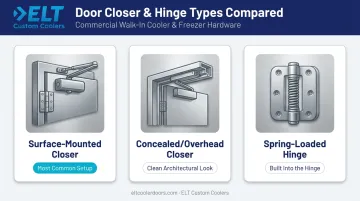
Many prehung cooler and freezer doors, including ELT Custom Coolers' lineup, build the closing function directly into the hinge rather than adding a standalone overhead unit. Buyers typically choose between cam-lifted hinges, which use gravity as the door rises on its cam to pull it shut, or spring-assisted hinges, which use internal spring tension to do the same job.
Adjustable Features That Affect Sealing
Even a well-built closer needs correct adjustment to seal properly. Three settings matter most:
- Sweep speed: governs the door's travel from fully open down to about 5 degrees from closed
- Latch speed: controls that final few degrees, giving the door the momentum needed to fully engage the latch
- Backcheck: cushions the door during opening, protecting hardware from being flung too wide
Set the latch speed too slow, and the door loses momentum before the latch can catch. Too fast, and repeated slamming stresses both the hardware and the gasket over time.
What Is a Door Latch?
A door latch is the mechanical fastener that holds a door securely shut once it has closed. It's a different animal than a lock: a latch simply keeps the door closed, while a lock adds a keyed or coded mechanism for security.
On cooler and freezer doors, latch quality carries extra weight. As the door swings into the frame, the latch pulls it tight enough to compress the gasket fully.
Infiltration alone can drive more than half of a walk-in's cooling load. A latch that only partially engages leaves a gap the gasket can never seal, inviting condensation, frost buildup on shelving, and temperature swings that put food safety at risk.
Three Main Types of Door Latches
Trade catalogs and hardware suppliers generally group cooler-door latching hardware into three functional styles:
- Cam-lift latches: use a rotating cam action to draw the door tight against the gasket for the strongest compression, often built into the hinge itself rather than a separate exterior latch
- Paddle latches: flush-mounted lever or paddle design for one-hand operation, increasingly specified for accessibility and high-traffic entry points
- Slam/safety-release latches: engage automatically when the door closes, paired with an interior release lever so anyone inside can exit even if the outside is locked
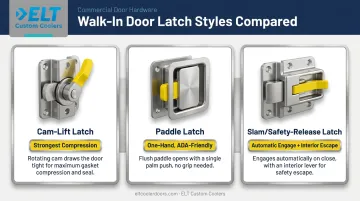
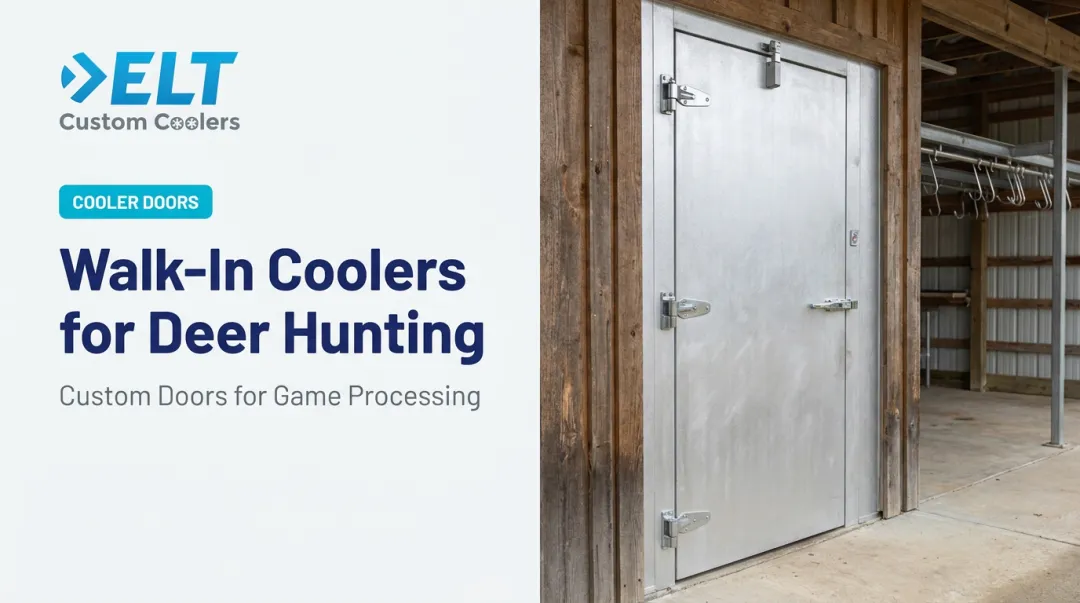
ELT Custom Coolers' prehung cooler and freezer doors ship standard with a **lockable latch and interior safety release handle** (the slam/safety-release style), paired with a choice of cam-lifted or spring-assisted hinges for the closing action.
A word on construction: look for corrosion-resistant metals such as stainless steel or heavy-duty zinc alloys. Cooler latches cycle constantly and face condensation, frost, and temperature swings that would corrode cheaper hardware within a year or two.
Interior safety release isn't a luxury feature. OSHA has cited employers over walk-in freezers lacking a way to open the door from inside, treating it as an entrapment hazard under the General Duty Clause. If your unit doesn't have one, it needs one.
How Door Closers and Latches Work Together
A closer and a latch function as a relay team, each responsible for one phase of the job. The closer brings the door toward the frame at a controlled speed; the latch takes over in the final inch to pull it fully into the sealed position. One cannot make up for a failure in the other.
Here's where things typically go wrong on cooler doors:
- Latch speed set too slow: the door loses momentum before reaching the frame, and the latch never fully engages
- Latch speed set too fast: the door slams, stressing the latch mechanism until it knocks out of alignment
- Worn closer hydraulics: the door swings but doesn't generate enough force to compress the gasket, even when the latch itself is fine
Any one of these breaks the seal. For a walk-in cooler or freezer, that partnership between closer and latch — more than the insulation or the refrigeration system alone — maintains the internal temperature the unit was designed to hold.
Both pieces of hardware have to do their job every single closing cycle, for years.
Certifications and Standards to Look For
Not every manufacturer builds closer and latch hardware to the same bar. A few certifications are worth checking before you buy:
ANSI/BHMA A156.4 grades door closers on durability and cycle life, from Grade 3 (lightest duty) to Grade 1 (heaviest duty). BHMA confirms Grade 1 closers are tested to 2 million cycles, making it the standard to look for on any high-traffic commercial door, cooler entries included.
For refrigeration-specific hardware, three certifications matter most:
| Certification | What it covers |
|---|---|
| NSF | Sanitation and food-contact safety for hardware in food-service environments |
| UL | Independent safety evaluation and certification |
| DOE 2017 | Energy conservation standards for walk-in cooler and freezer systems |
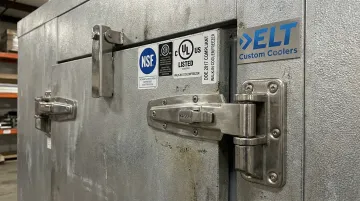
ELT Custom Coolers' walk-in door systems are built to meet NSF, UL, and DOE 2017 standards, and its hardware components are sourced to match those same performance requirements. Before purchasing, ask for certification labels or documentation in writing, especially for installations in licensed food-service kitchens where inspectors will check for exactly this paperwork.
Choosing the Right Closer and Latch for Your Walk-In Cooler
Picking hardware isn't one-size-fits-all. Weigh these factors first:
- Traffic level — a busy kitchen entry needs heavier-duty hardware than a back-room storage cooler
- Door weight and size — larger, heavier doors demand higher-torque closers to fully seal every cycle
- Interior vs. exterior placement — exterior doors face weather exposure and need more corrosion resistance
- Operating temperature range — freezer applications (well below freezing) put more stress on hardware than standard cooler temperatures
These variables explain why hardware selection matters as much as the door itself. ELT Custom Coolers, an American family-owned business with over 18 years in the cooling industry, engineers its closer and latch hardware to hold a tight seal for the working life of the unit, not just the first year.
Even the best hardware needs upkeep. Manufacturer guidance from KPS Global recommends inspecting door hardware and the sweep gasket monthly for wear, misalignment, or resistance in the closing motion. Pair that with professional installation, and you avoid the premature hardware failure that drives up energy costs and shortens gasket life.
Frequently Asked Questions
What is a closer and a latch?
A closer regulates how a door closes, controlling its speed and force so it doesn't slam or stop short. A latch mechanically secures the door once it's shut. Together, they seal a doorway completely.
What are the three types of latches?
Cam-lift latches use a rotating action for maximum seal compression, often built into the hinge. Paddle latches offer easy one-hand operation for high-traffic entries. Slam/safety-release latches engage automatically and include an interior release for safety.
What is the difference between a door latch and a door lock?
A latch simply holds a door shut once closed. A lock adds a keyed, coded, or cylinder mechanism on top of the latching function to restrict access.
Do walk-in cooler doors need both a closer and a latch?
Yes. The closer brings the door to the frame with controlled force, and the latch locks it into a fully sealed position. Without both, you get either an unsealed door or one that slams and wears out fast.
How do I know if my door closer needs adjusting or replacing?
Watch for slamming, a door that won't latch, visible hydraulic fluid leaks, or slow and uneven closing motion. Any of these signals it's time to adjust the settings or replace the unit.
How often should cooler door hardware be inspected?
Check hardware and gaskets monthly, then do a deeper inspection every 6-12 months for wear, misalignment, or gasket damage that could compromise the seal.